SalesPilot CRM: Building a Production-Ready Business System

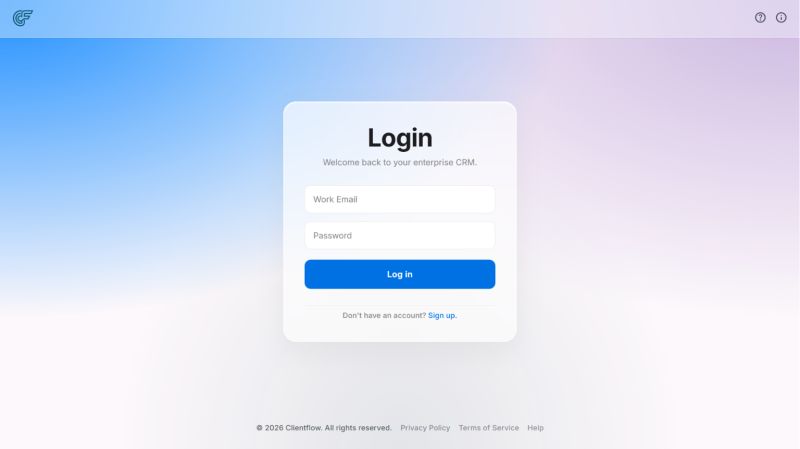
I wanted to build something that feels closer to what businesses actually use instead of another CRUD project. So I built SalesPilot CRM — a full-stack CRM for managing leads, customers, bids, sales, and team workflows.
Why I Wanted to Build Beyond Simple CRUD
When developers begin learning backend engineering, typical tutorials often stop at basic 'Todo List' or rudimentary blog applications where a single user inserts, updates, and deletes strings in a database. While this is great for grasping fundamental syntax, real-world businesses operate very differently.
In enterprise software, multiple departments need distinct permissions, data relationships are deeply interconnected, financial proposals need accurate auditing, and security cannot be an afterthought. SalesPilot CRM was conceived to tackle these real-world business challenges head-on.
Core Features & Architecture Breakdown
I structured SalesPilot CRM around practical daily business workflows:
- Executive Insights Dashboard: Visual metrics tracking pipeline velocity, total closed revenue, active lead count, and monthly win/loss ratios.
- Visual Lead Pipeline: Stage-based pipeline (New, Contacted, Proposal Sent, Negotiation, Closed) allowing sales reps to update prospect statuses seamlessly.
- Customer & Account Management: Comprehensive profile views with full interaction histories, contact information, and linked business opportunities.
- Bids & Proposals Management: Automated quotation generation, document tracking, and client sign-off records.
- Role-Based Access Control (RBAC): Multi-tier authorization model distinguishing between Admin (full configuration & team oversight), Manager (team quotas & reporting), and Sales Representative (assigned lead pipeline).
- Enterprise Security Standards: Secure PHP session management, Bcrypt password hashing, rigorous CSRF token verification, and 100% prepared SQL statements to neutralize SQL injection vulnerabilities.
Technical Takeaways & Real-World Engineering
This project taught me much more than writing PHP code. It forced me to think like a software architect:
Designing relational database foreign keys that maintain referential integrity without creating performance bottlenecks. Handling edge cases where team members reassign leads without corrupting past historical notes. Implementing session timeouts and strictly sanitizing user input across all forms.
As I noted on LinkedIn, if developers ever claim a project is 'completely finished,' they're either lying or they've accidentally dropped the production database! There are always refinements to be made in index performance, asynchronous AJAX enhancements, and automated reporting.
Original LinkedIn Discussion
Here is the official update as posted on my LinkedIn profile. You can interact directly with the post, share your feedback, or connect with me: